
Fiskirækt, Laxa a Keldum
Life comes to life in the old riverbed – Magnificent construction works on the Laxá River in Keldur
Nov
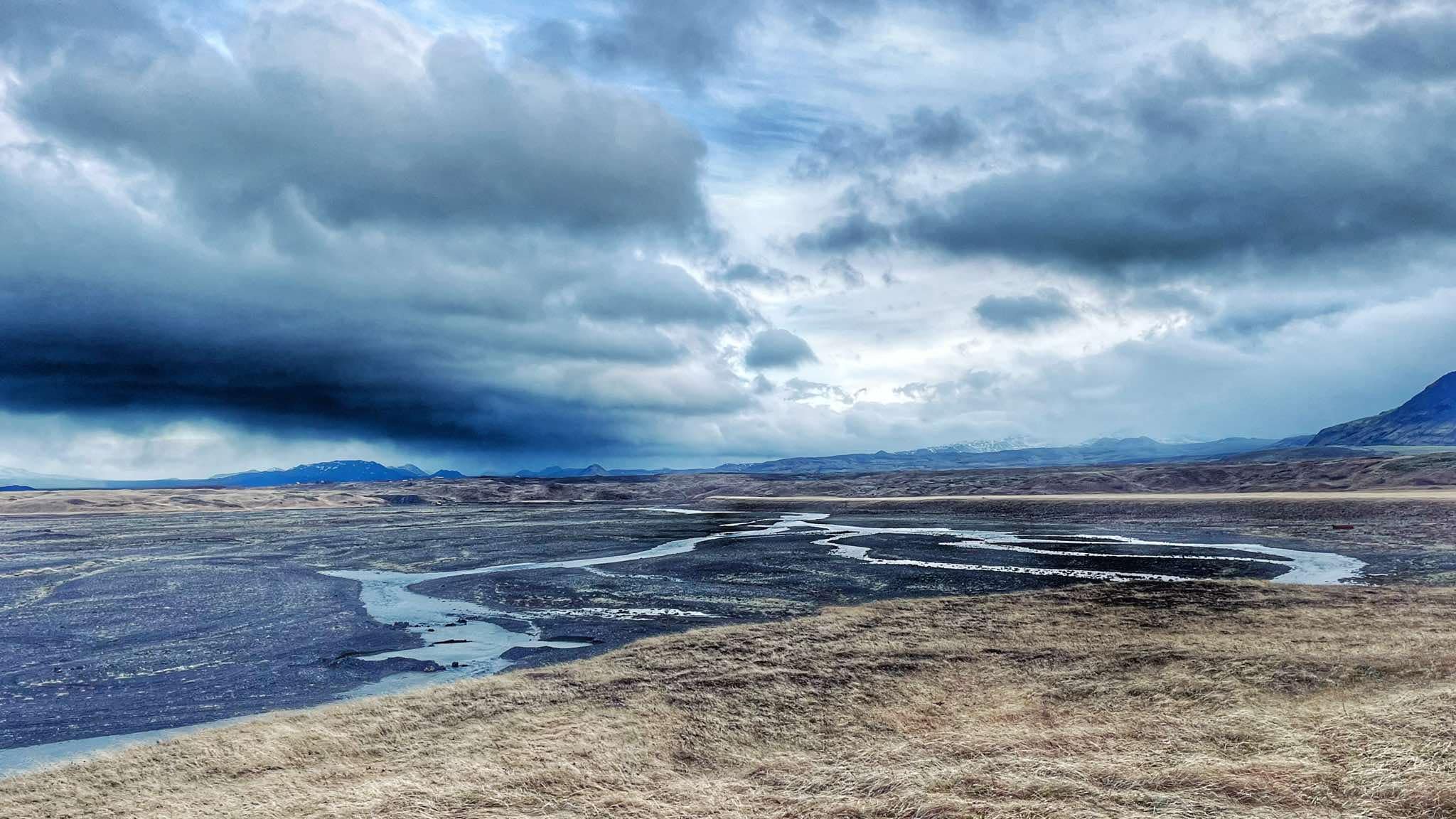
The old riverbed
Between Keldnalækur and the waterfall Haldfoss, the river flowed until a dam was built in 1968. The river had swept across an area of about 60 hectares and caused significant land degradation. Now the old riverbed has been re-watered, creating new habitat for salmon and trout. At the same time, there is an opportunity to reclaim the area and cultivate the land.
By diverting a small amount of water from the river into the old channel and slowing its flow with the vermit ponds, ideal conditions are created for the hatching and rearing of juvenile trout and salmon. The vermit ponds increase the surface area of the water, which can then be heated by the sun. The water that enters the vermit ponds will be the warmest available from the Eystri Rangá, and there is a possibility of raising its temperature even further in the ponds. Although the waste water returns to the river at Haldfoss, where the flow is low, it is unlikely to have a measurable effect on the temperature of the river as a whole. To monitor this, thermometers will be installed for precise measurements.
Summer Construction:
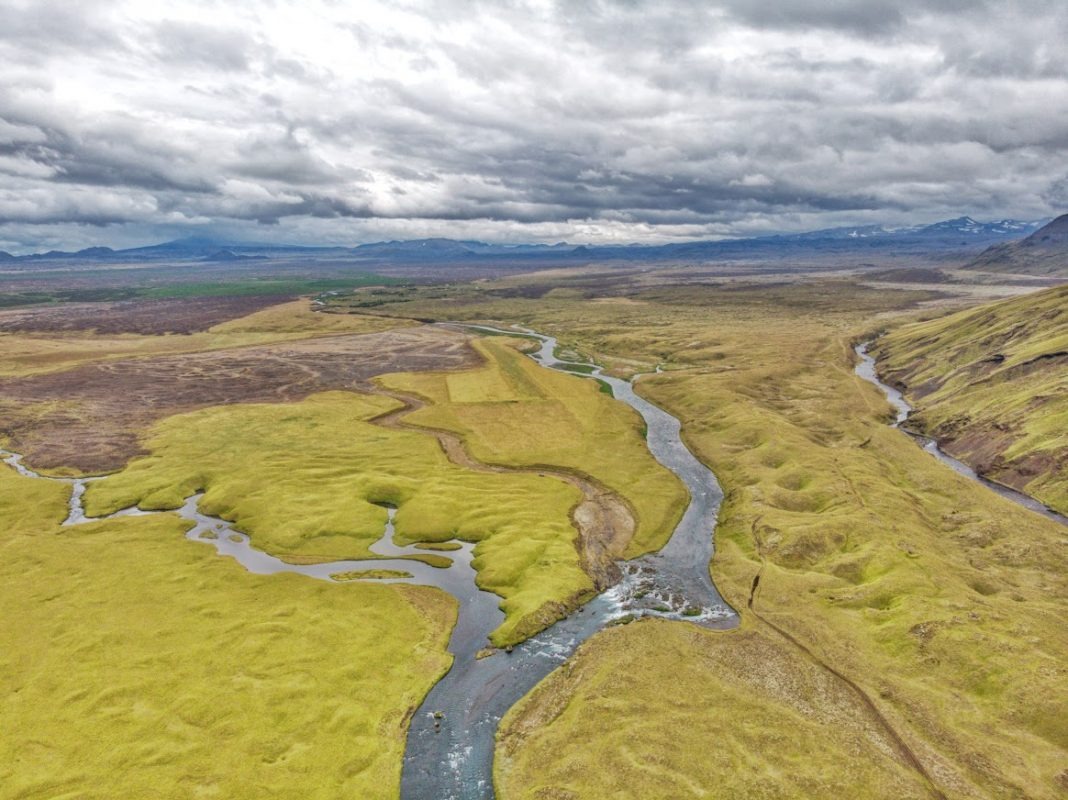
This summer we tackled a major project on the Laxá River in Keldum, which marks an important step in creating new and improved habitat for North Atlantic salmon. The project involves restoring the old riverbed, which stopped flowing about 57 years ago, but now the water is flowing there again – and with it, new life has sprung up. The first steps: We started by damming the riverbed where it flows into Haldfoss, a spectacular waterfall at the bottom of the old channel. Next, we dug through a dam that had been built in 1968 to protect the land from erosion. This dam had blocked the flow of water for more than half a century. When we opened the water flow again, everything came back to life – the water began to flow the more than two kilometers from the dam down to Haldfoss. The old riverbed comes to life: The water now flows freely down the riverbed, forming a beautiful lagoon at Haldfoss. This lagoon is ideal for salmon fry, which are now protected and able to grow naturally. We also plan to add more ponds along the way. The riverbed comes to life in Keldur
First steps
We started by damming the riverbed where it flows into Haldfoss, a spectacular waterfall at the bottom of the old riverbed. Next, we dug through a dam that had been built in 1968 to protect the land from erosion. This dam had blocked the flow of water for more than half a century. When we opened the water flow again, everything came to life – the water began to flow the two kilometers from the dam down to Haldfoss. The temperature where the water enters was 9.2 degrees in early July, and after it had flowed along the old riverbed for two kilometers, the temperature had reached 12.6 degrees.
The old riverbed comes to life
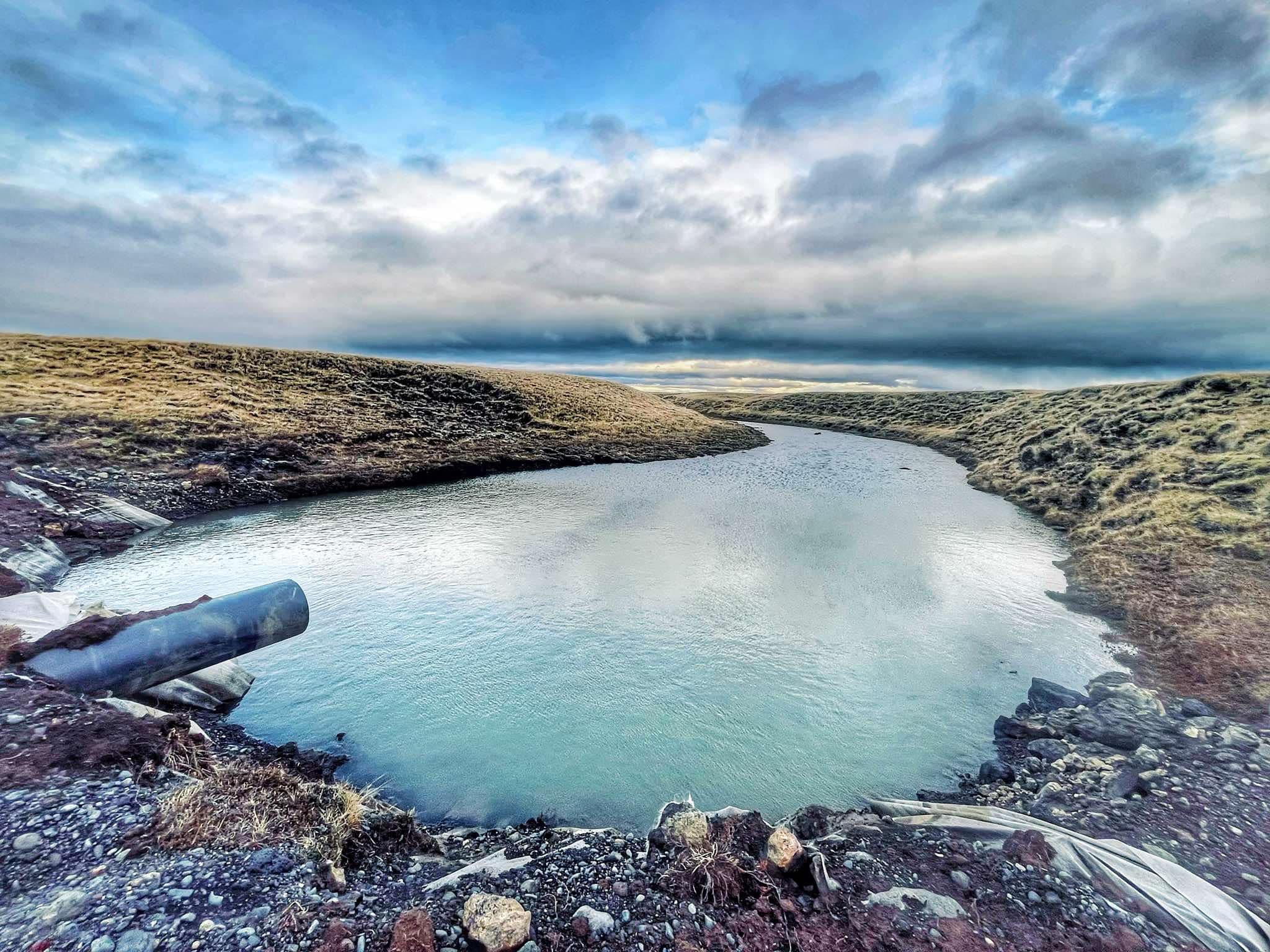
The water now flows freely down the channel and forms a beautiful lagoon at Haldfoss. This lagoon is ideal for salmon fry, which now enjoy protection and natural growth. The water now flows freely down the channel and forms a beautiful lagoon at Haldfoss. We also plan to add more reservoirs on the way down the channel. vermitjörnum á leiðinni niður farveginn.
Introduction: https://youtu.be/1t0v10vvufc
The thermal lakes and the biosphere
The thermal ponds that have been constructed are a key part of the project. They will heat the water in the summer, creating ideal conditions for the growth of the salmon fry. The area already has a diverse ecosystem – flies, insects, bugs and other small animals – that the fry can use as food.
Experts express admiration
Biologists and aquaculture experts Jóhannes Sturlaugsson and Björn Theodórsson have been involved in extensive research and consultancy for this project. They are very familiar with the area and the potential it offers for the salmon population. They believe that this is probably one of the largest projects in Iceland today when it comes to expanding habitat for North Atlantic salmon.
They also highlight the importance of having such a managed habitat for research and monitoring, which is unique in Iceland. This creates both opportunities to monitor and promote the sustainable growth of salmon stocks, as well as providing valuable information for the scientific community.
The importance of the project
Restoring the old riverbed is not only important for the salmon but also for the entire ecosystem. The project gives us a unique opportunity to observe the spawning and growth of salmon fry, as well as allowing natural processes to do their best.
We are incredibly proud of these projects and look forward to seeing the salmon population thrive in the area. This is just the beginning of a new chapter in the life of Laxá á Keldum – and we look forward to continuing this journey!
