
Fiskirækt, Laxa a Keldum
The old riverbed comes to life in Keldur
Feb
Summer Construction:
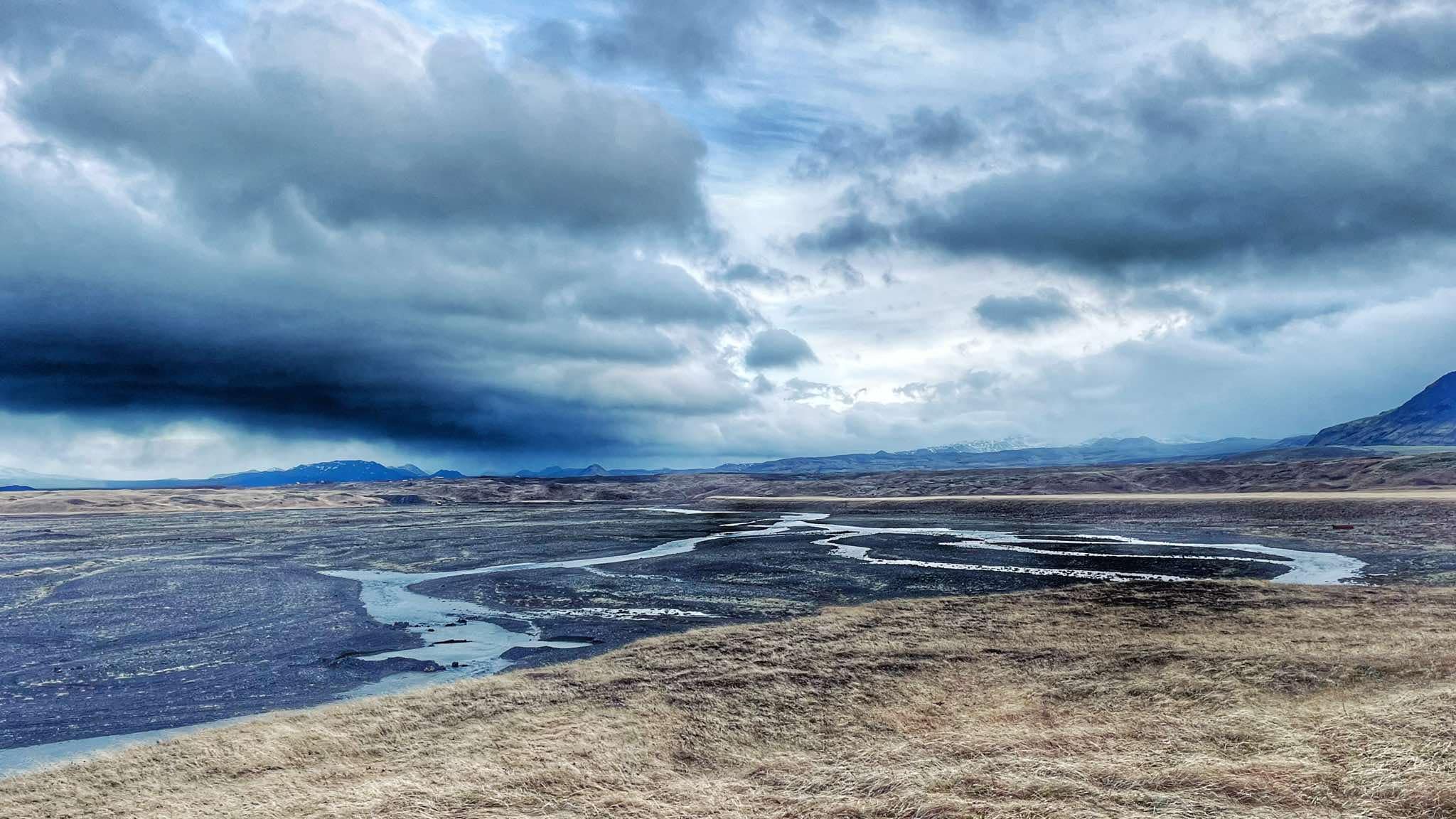
This summer we tackled a major project on the Laxá River in Keldum, which marks an important step in creating new and improved habitat for North Atlantic salmon. The project involves restoring the old riverbed, which stopped flowing about 57 years ago, but now the water is flowing there again – and with it, new life has sprung up. The first steps: We started by damming the riverbed where it flows into Haldfoss, a spectacular waterfall at the bottom of the old channel. Next, we dug through a dam that had been built in 1968 to protect the land from erosion. This dam had blocked the flow of water for more than half a century. When we opened the water flow again, everything came back to life – the water began to flow the more than two kilometers from the dam down to Haldfoss. The old riverbed comes to life: The water now flows freely down the riverbed, forming a beautiful lagoon at Haldfoss. This lagoon is ideal for salmon fry, which are now protected and able to grow naturally. We also plan to add more ponds along the way. The riverbed comes to life in Keldur
Fyrstu skrefin:
We started by damming the riverbed where it flows into Haldfoss, a spectacular waterfall at the bottom of the old riverbed. Next, we dug through a dam that had been built in 1968 to protect the land from erosion. This dam had blocked the flow of water for more than half a century. When we opened the water flow again, everything came to life – the water began to flow the two kilometers from the dam down to Haldfoss. The temperature where the water enters was 9.2 degrees in early July, and after it had flowed along the old riverbed for two kilometers, the temperature had reached 12.6 degrees.
The old waterway comes to life:
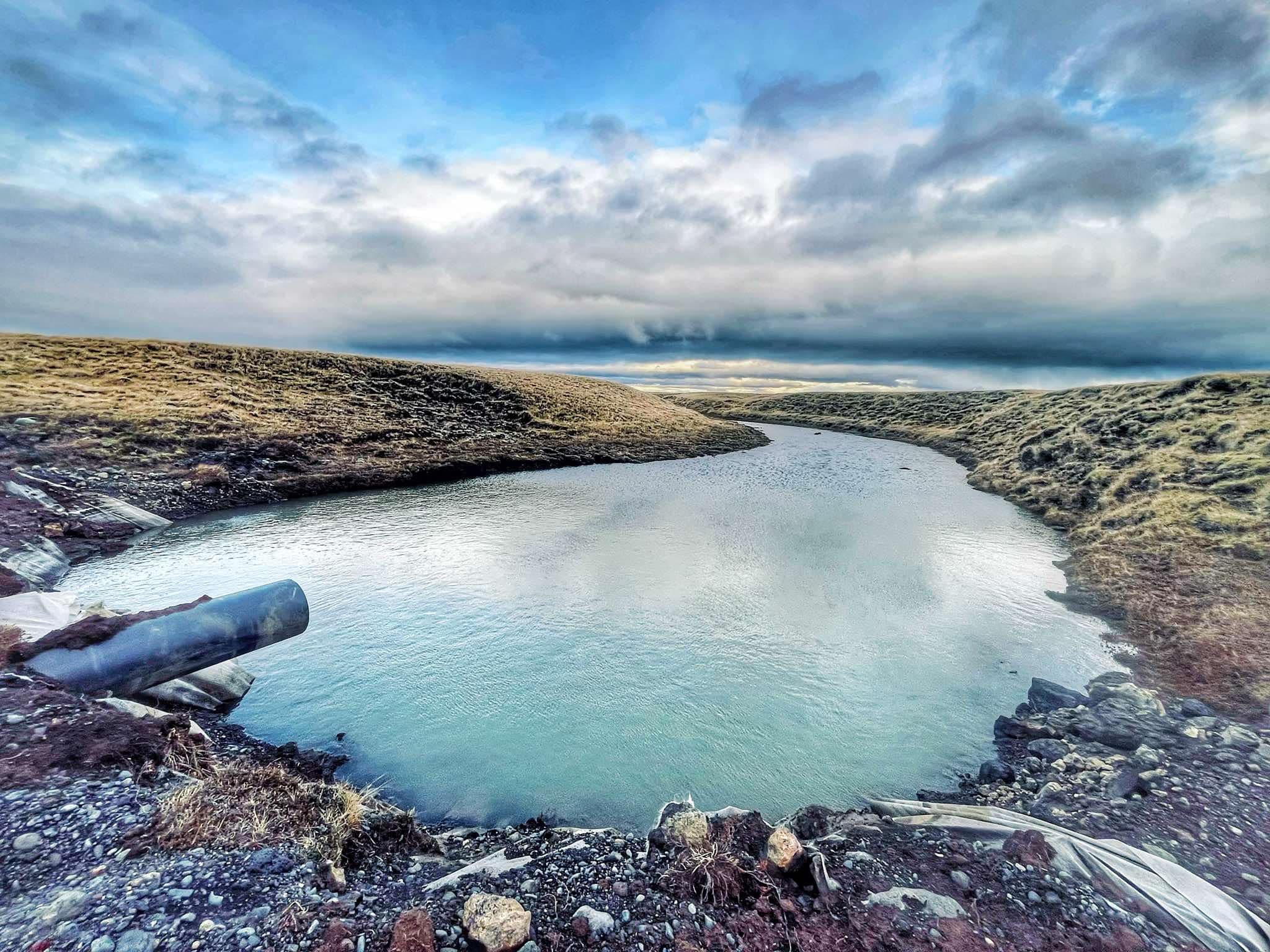
The water now flows freely down the channel, forming a beautiful lagoon at Haldfoss. This lagoon is ideal for salmon fry, which now enjoy protection and natural growth. We also plan to add more spring ponds along the way down the channel.
Introduction – the old riverbed:
The thermal ponds / lakes and the biosphere
The thermal ponds that have been constructed are a key part of the project. They will heat the water in the summer, creating ideal conditions for the growth of the salmon fry. The area already has a diverse ecosystem – flies, insects, bugs and other small animals – that the fry can use as food.